Katharine Frazier
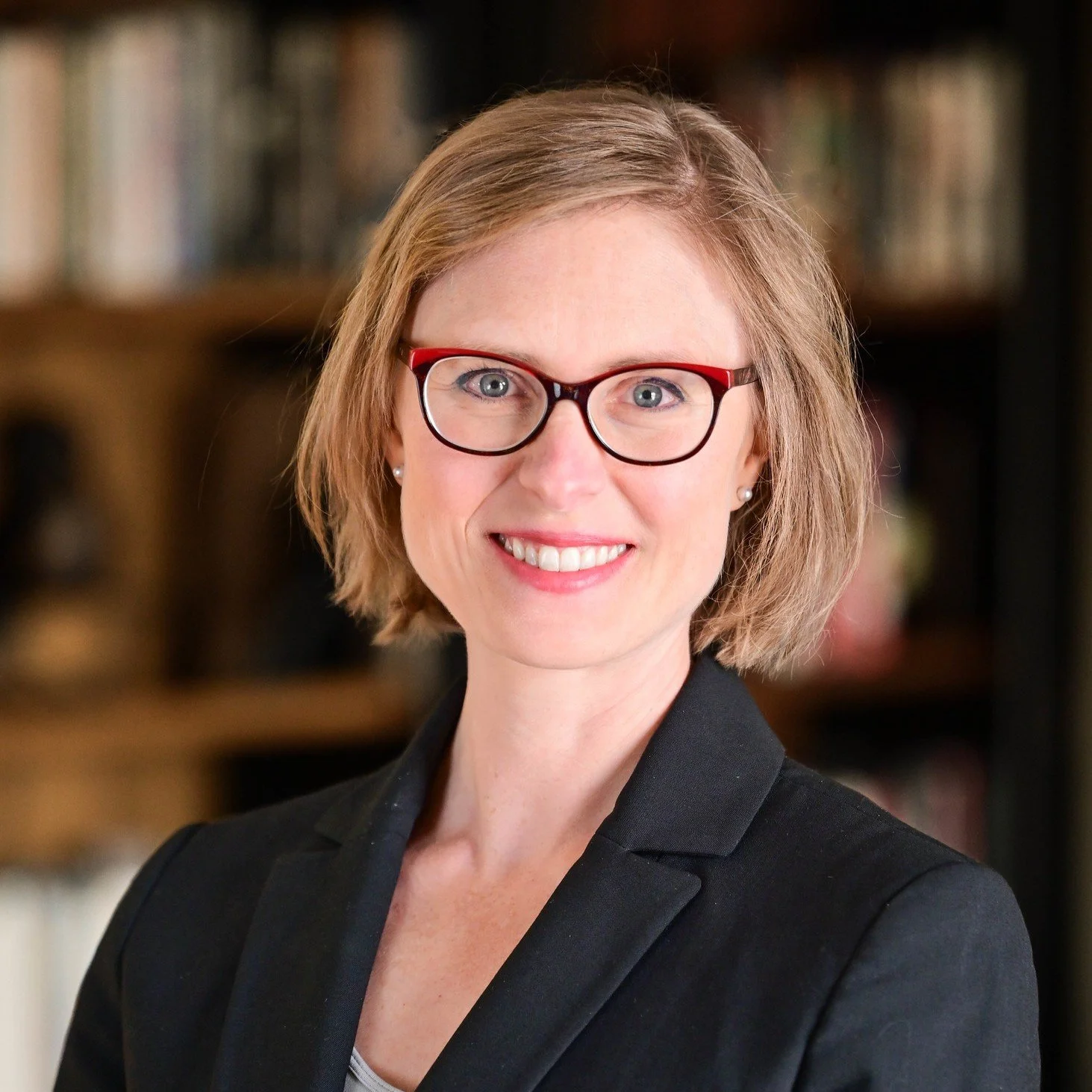
Katharine Frazier
-
An Alamance County native, I graduated from Graham High School and Elon University. After earning my BFA, I spent several years in stage lighting in New York City, where I worked productions from small shows to American Ballet Theatre at the Metropolitan Opera House. Stage production teaches you grit, collaboration, and solving problems under pressure with limited resources and time.
Home was calling, and I returned to Alamance County in 2010 and started working for a family-owned business, SkySouth Aviation. My small business experience inspired me to return to Elon for my MBA. After completion, I began working in the accounting team at Impact Fulfillment Services. I became a Certified Management Accountant in 2020, and today, lead the finance team for the Contract Packaging/Manufacturing segment of Ryder Integrated Logistics.
I am an active member of First Presbyterian Church, Burlington where I sing in the choir and ring handbells. I have served on the Board of Directors for the Alamance Chamber, Elon LSB Graduate Advisory Board, and the founding board of Centerpoint Classical Academy. I’ve enjoyed volunteering in schools, including several career fairs and serving as a Reading Buddy at Andrews Elementary. Learn more at frazierforschools.com.
-
If we’re going to leave the world better than we found it, schools are a great place to start, and it’s up to all of us to be good stewards of our public schools and bring our varied skillsets to the table. Our teachers from Graham High School taught us to give back to our communities – it was an expectation. That expectation has resonated with me my entire life and leads me here today.
As a parent researching schools, I’ve developed a passion for what’s possible in education. As a finance person, I’ve listened to budget challenges over the years and feel called to engage. My friends and family strongly hinted it was time to stop talking about schools – and do something.
My professional background in financial accounting, reporting and analysis gives me a unique edge that may be helpful when evaluating financial commitments, reviewing the budget, and communicating how our budget requests align with our strategic priorities. I understand the concerns of the county commissioners and believe I have a skillset that can help bridge the gap.
-
1) High-quality academics: set district-wide specific, measurable, and achievable academic goals tied to our strategic vision, and advocate for strong curriculum, especially at the elementary level, in history, civics, science, literature, and the arts.
2) Responsible use of technology: Balance traditional pen-and-paper methods with intentional and quality technology instruction and develop responsible AI policy.
3) Healthy and safe students: Prioritize school security in building master plans and identify what teachers need to help maintain safe and orderly classrooms.
A sound financial foundation is the pathway to achieving these goals.
-
District-wide elementary curriculum supports consistency across schools and builds a strong foundation for middle and high school. The new ELA curriculum is underway this year, and tracking its success, alongside our existing math curriculum, should be a board priority. Exploring high-quality curriculum for science and social studies is a great next step for building broad knowledge in the early grades, which is critical for reading comprehension and critical thinking.
At the middle and high school level, we should keep reviewing and providing broad course options for both career and college readiness. I would also like to better understand how we presently support struggling readers in the older grades, and advocate for resources if needed.
At every level, the board needs to recognize real or perceived disparities between the schools, work to understand the root causes, and create feedback loops, such as parent and teacher surveys to identify possible actions that will drive change. I’m also a big believer in studying what is working in other schools or districts and having a conversation about what makes sense for ABSS.
-
1) The budget process should begin with goals - specific, measurable, and achievable district-wide goals that are tied to our strategic plan. Cross-functional conversations should determine the resources needed to achieve these goals. I will view all financial decisions through the lens of academic outcomes.
2) I will advocate for building a 5-year operating expense model, alongside our existing Cap Ex and CIP 5-year plans. This will show what it would take to fully fund our schools, will be pressure-tested internally for accuracy and efficiency, and will serve as a guide for collaborations with commissioners and community partners. This does not guarantee funding, but I believe if we specifically name the funding gap and build a plan, we have a better chance of closing it.
3) With rising costs impacting all community agencies, we must be sensitive to limited resources, build confidence with the commissioners that we are operating as efficiently as possible, and support every request with data and measurable goals.
-
Transparency, data, and honest conversations, all presented with a collaborative mindset. ABSS has a critical task of rebuilding trust after a challenging history, and while there is good progress, it doesn’t happen overnight.
Difficult financial conversations are much smoother when the facts are presented clearly. When a site manager or corporate finance leader raises questions, addressing them seriously and logically builds trust and often results in better understanding on all sides. Regarding capital dollars, one possible idea is to form an ABSS Building Task Force that contains representatives of the district and the commissioners to visit our schools and work collaboratively on a plan to address the needs of our buildings.
We must work to understand the concerns of the commissioners, respond thoughtfully with data and facts, and be willing to debate openly within our own board so we show we are thinking critically. By critically evaluating our budget requests and building quantitative “Academic Return on Investment” reports to share regularly, I believe these conversations will shift favorably.
-
Formally: feedback surveys, listening sessions and focus groups with teachers and staff at each school. Regular work sessions with the county commissioners are also important to ensure our priorities are aligned. Informally: visiting schools and having real conversations. Attending events and meeting families. Being present.
District-wide goals should be informed by this feedback, not set in isolation. When gathering input, it’s important we ask the right questions to understand priorities and also the barriers, so we can identify strategies to remove them, and allocate resources accordingly. I would love to see the budget driven by these goals.
While I have some strong opinions, I lead with curiosity and always try to seek understanding first. Hearing ideas, solutions, and feedback from the teachers we serve may be our most powerful tool to achieve our goals.
-
We must keep the big picture in sight. At work, I coach my team to use “zoom in/zoom out thinking.” In this context, that means “zooming in” to pay attention to the experiences of our students each day and examining the nuances of policy and “zooming out” to see where we are headed for the next generation. With every decision we make, we must consider its potential long-term impact.
Growth is both an opportunity and a challenge for our community. As a school system, we must plan ahead to ensure we have facilities that meet the needs of our future community. New school buildings cannot be built overnight. A building master plan is in development that will address long-term facility needs, and we should take these recommendations seriously. Once needs are determined, we will need to work collaboratively with our county commissioners and community partners to fund future major projects.
Regarding overall strategy, a new strategic plan for the district will be finalized soon. This plan should guide specific short-term goals and resource allocation, so that each year, we make progress towards achieving our long-term goals.
-
Many years ago, I led a team developing a Vision Statement for First Presbyterian Church of Burlington. This was a small team of people more experienced and much wiser than me. We built a process with multiple feedback loops including one-on-one conversations with leadership, a congregation-wide survey, and small group sessions where we had open and honest conversation about what our church means to us and what we want the future to look like. It took a year, and the result has since guided organizational restructuring and other initiatives. Through this, I learned the value of leading by listening – hearing different perspectives and discerning actionable insights from them.
Professionally, I’ve been a leader in multiple accounting system implementations following acquisitions. In those experiences, technology is the easy part, but guiding people through transformation is delicate and takes a lot of teaching. Additionally, I lead our unit’s annual budgeting process, which is an intense, multi-round process with detailed scrutiny. I answer hard questions to justify our budget and forecast updates throughout the year, and am always learning to ask sharper questions when evaluating our own work.