Amy Scott Galey (R)
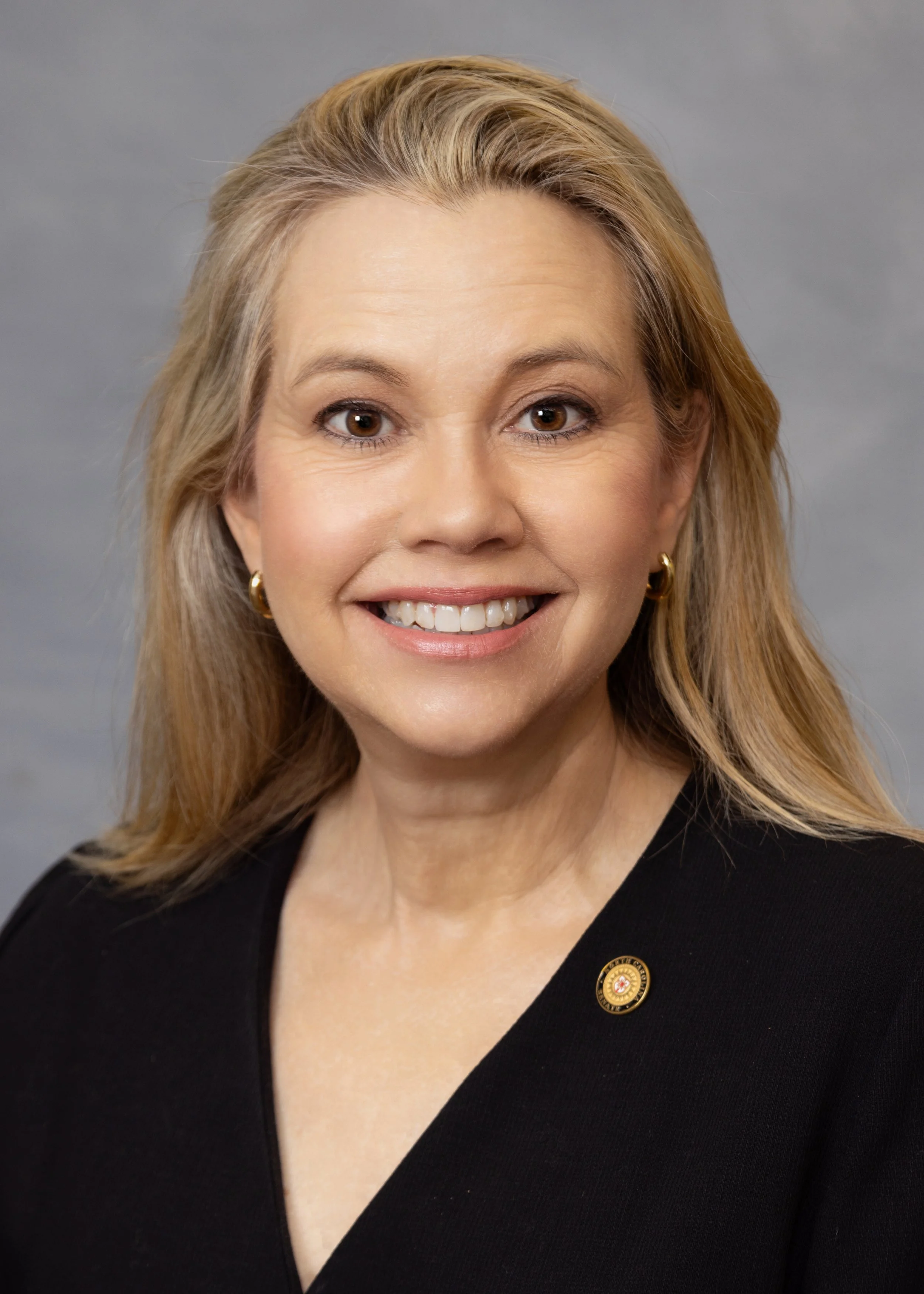
Amy Scott Galey
-
I grew up in northern Alamance, in the Union Ridge community, and graduated from Western High School before finishing my formal education in Chapel Hill, where I earned a B.A. in history and a law degree. I married an Air Force pilot and moved to Charleston, SC, where I practiced law. My husband and I returned to Alamance County in 2009 with our three children, living in my grandparents' former home, around the corner from my parents. The children graduated from ABSS high schools, UNC-CH, App State, and NCSU.
I practiced law with George B. Daniel, P.A., in Yanceyville, in criminal defense, family law, and competency court. This courthouse-focused practice of law was excellent preparation for serving in the General Assembly, because it gave me broad experience with many of the issues that come before it.
In 2015, I read a study by the US Geologic Survey that said the area from Raleigh to Atlanta would become continuous urban development, similar to the Boston/D.C. corridor, by 2060. I learned that Alamance County government was not doing much at that time in anticipation of the changes coming to our area, so I ran for county commissioner . After being elected to the Alamance Board of Commissioners in 2016, I realized how the growth issue penetrates every aspect of state and local government. I served on the Board from 2016-2020, and was Chair from 2017-2020.
In 2020, I was elected to the NC Senate. I served as a Chair of the Education Committee, which in the Senate includes K-12 education as well as the community colleges and university system. I currently serve as Chair of the Senate Health Committee, as well as Chair of the Administrative Procedures Joint Legislative Oversight Committee, which among other things oversees state licensing boards. I am also on the Senate Education, Justice and Public Safety, Elections, and Rules Committees.
Campaign website amygaley.com; Facebook Amy Galey for NC Senate; x @amyscottgaley; Instagram amy_scott_galey
-
I ran for the NC Senate because I saw the growth in our community's population and anticipated how it would change the culture and quality of life in the region. My family lived in Mount Pleasant, SC, from 1999-2009, when thousands of people moved to the coast. I saw how the change in population impacted that community.
As a native of Alamance County, I am concerned with protecting farmland and natural resources while absorbing the people who make this their new home. A growing local economy brings a lot of benefits in new jobs and prosperity, but it also brings challenges in keeping up the infrastructure, avoiding overcrowding, and keeping limited-supply needs (such as housing) affordable.
By the end of 2028, I want to point to property tax relief, lower healthcare costs, and improvements in educational outcomes for children and adult learners.
-
Escalating healthcare costs; supporting positive educational outcomes for children and families; affordability.
I have worked hard in the Senate to reduce cost and increase access in healthcare, including addressing the use of artificial intelligence to inflate healthcare billing. We must repeal the antiquated certificate of need laws, which choke the supply of new healthcare facilities and services. I support transparency in healthcare billing and believe that people should easily be able to shop for elective services such as knee replacements or MRIs. We should not be slapped with unexpected medical bills of thousands of dollars for non-emergency services.
I strongly support school choice, because we should focus on outcomes for children, who should have access to the best educational environment that suits them. There's been a lot of talk about raising teacher pay, and the 2026 state budget raised teacher pay by an average of 8%. Teacher raises in the past few years have rightly been tied to accountability and outcomes, rewarding teachers who show a positive impact on student learning. We have also implemented the Advanced Teaching Roles in some schools, which reward teachers for mentoring their peers and taking on more responsibilities.
There is little evidence that teacher pay is a leading factor in North Carolina teachers leaving the profession. Teacher attrition is more commonly caused by poor classroom discipline and a lack of support from building administrators. My service on the Senate Education Committee helped me to understand the importance of an engaged, present school principal.
Finally, affordability is a serious issue for many families. The General Assembly will reduce the gas and diesel tax, to help drive down cost. Transportation costs are closely tied to overall inflation and also make it more expensive just for people to get to work. Tax relief for motor fuels will be a big help.
-
State funding allotments are tied to several criteria, including low wealth and small enrollment districts. The formulas are designed to close the total funding gap between rural, low-wealth counties and wealthy counties. If you look at the list of counties and their state per pupil funding (https://apps.schools.nc.gov/public/f?p=145:35::::::) you will see that the highest ranked counties are very rural with a low tax base and relatively few students, and the lowest ranked counties have a high tax base and high enrollment.
For example, Wake County's total assessed real property value is about $310 billion, raising $31 million per penny of tax. However, rural Greene County has a real property tax base of $1.4 billion and raises only $140,000 per penny of property tax. That is an enormous gap in local funding potential, and state allotments are intended to make sure that rural students have similar opportunities to urban students.
Alamance County's total assessed property tax base is $27 billion and one penny on the tax rate raises $2.7 million. The size of our property tax base is the reason that ABSS ranks 85th of 116 LEAs in state funding. The LEAs that rank below us are in counties with an even bigger tax base than Alamance. Wake ranks 110 in state funding, while Greene is #15. A low rank in state funding is not a sign of mismanagement or neglect. It is the natural outcome of policies intended to equalize opportunities between poor and rich counties.
There must be notice to districts well in advance of any looming funding changes due to tax base growth and loss of allotments. I know that ABSS and Randolph County Schools were not prepared in 2026 for the sudden changes in state funding due to tax base growth. I strongly believe that school districts should be held harmless for at least one budget cycle if they will lose operating funds due to growth and changes in the allotment funding formulas.
-
I support eliminating the "Blue Ridge" loophole that allows a full property tax exemption for apartment buildings with only a 1% nonprofit interest. I support the local option sales tax, especially with anticipated November 2027 opening of Bucees, which will generate very strong retail and gas sales. (Changing the apartment exemption also helps the municipal governments, not just the county.)
-
The state has established significant grant and low cost loan programs to support water and sewer projects, which are extremely expensive and difficult for municipalities to finance without assistance. Projects are ranked according to need and county wealth, with the most poor counties receiving the most assistance. I support continuing to fund these opportunities to the greatest extent possible. I have assisted our local governments in obtaining tens of millions of dollars from these programs as well as given directed grants for smaller projects.
Road construction is directed through the State Transportation Infrastructure Program, or STIP, which is a way that road needs are evaluated on neutral, data-driven criteria. In the past, road construction was directed in favor of politically well connected developers without much consideration for the benefit of the general public. I support continuing the STIP. I also support local communities shouldering more of the cost burden for extremely expensive projects with high local impact, including toll roads (Charlotte). We need to seriously think about the trade-offs of maintaining very vulnerable roads, such as NC 12 on the Outer Banks.
School construction is supported with 51% of the revenue from the Education Lottery. The Department of Public Instruction ranks the school systems' requests. ABSS received $2M and Randolph County Schools received $1.8M in 2025 for repair and renovation from the lottery. By statute, school construction is a local responsibility. I support helping low wealth systems with a small tax base to upgrade their facilities.
-
As a county commissioner, I served on the Jordan Lake One Water Association, where I learned to view water quality issues through the revenueshed. Water quality in the Haw River directly impacts those downstream in Pittsboro or Apex, which draw water from the Jordan Lake. Instead of imposing cost on the upstream communities through regulation, the downstream users of the water should help shoulder the financial burden. I support creating a regional water authority of the entire revenueshed for the Jordan Lake, giving it the power to impose fees on water users. Those fees would be directed upstream to cities like Burlington and Mebane, to help them eliminate PFAS and other contaminants, as well as other water quality projects.
We need to protect the buffers of the Haw River. I was active in creating the new 500 acre passive use park between Saxapahaw and the Orange County line, because this will keep sediment and debris from polluting the river. Studies have shown that the greatest pollution from the Haw River comes from the sediment that washes down the river after heavy rains, settling on the bottom of Jordan Lake and emitting nitrogen and phosphorous. Keeping the river banks intact and protecting them from development will be vital in protecting water quality. The downstream users should help shoulder this financial burden.
The people of Alamance County should not be financially burdened with protecting the water quality for other communities. The water-using communities should pony up and help shoulder that burden, because they directly benefit from it.
-
I disagree with "affordability solutions" that increase the size of government or put the burden of affordability on the taxpayer. That's not resolving affordability, that's just shifting the burden from one group to another. I do not support increasing the size of housing vouchers, because they have been shown to just increase the rent charged . We need to address the underlying costs of construction due to administrative delays and costs.
There is so much that we can do in North Carolina to address the cost of health care. However, expanding Medicaid is not a good solution. That just transfers the cost to the taxpayer and makes it hard to get a appointment due to the increased demand with a limited supply. Also, as more people are on Medicaid, the cost of private insurance rises for everyone else. I support increased educational opportunities for healthcare workers, including through the community college system and nursing programs at the UNC system schools.
The cost of child care is a real problem for working families. Last session, I worked to decrease expensive and irrational regulations on child care facilities to lower cost. Also, we often forget about small, home based childcare arrangements. I support helping people start their own small businesses taking care of children at home. There are opportunities for child care outside of a large, classroom-type childcare facility.
For education, I support each child accessing the educational approach that best suits their learning needs. A child's zip code should not determine the opportunities available to them. I support charter schools, which have been extremely successful in Alamance County, and opportunity scholarships, which account for only 3.5% of the state's education budget, because a child should not be trapped by finances into a school where they are being bullied or their learning needs are ignored. I have received too many emails from parents in this situation.
-
I am always open to good ideas! Two policy areas that should always be bipartisan are animal welfare and protection of children. Reform of the foster care system and addressing termination of parental rights for abusive parents is a high priority for me. I am happy to work with anyone who has the best interests of children, especially our most vulnerable, at heart.
For animal welfare, our own Rep. Steve Ross set an outstanding example by championing HB657, Duke's Rescue Act, which would outlaw tethering dogs in extreme conditions. The bill is named for Duke, who was found chained next to another dog who had starved to death. PETA, a Democrat-leaning organization, is a proponent of the bill. Although I disagree with PETA on their aggressive advocacy approach, I am happy to work with them on animal welfare issues. While HB657 was not enacted this session, I plan to work with others to introduce the bill in the Senate in 2027.
There is a proposal to build a new ABC warehouse with a public-private partnership instead of having it entirely state funded and controlled. The proposed partnership would result in the warehouse costing almost twice as much as if the state built it and is a bad deal for the taxpayers. I will not support this terrible idea.
Regarding regulation of hemp, everyone agrees that minors should not have access to these intoxicating products. However, there is little understanding about the harmful chemicals on our shelves in our unregulated hemp industry, a lot of which comes to North Carolina from overseas. We should outlaw the sale of hemp products to minors in conjunction with safety standards for the products for adults. Some people say ban hemp to children now and worry about the product safety later, but I believe they should be coupled. I have spoken with folks from the hemp industry, and they agree that responsible market participants embrace product safety standards.
-
I am continually reaching out to local governments, residents, and community members to better understand how bill proposals would impact our communities. Before both the long and short sessions, I meet with local governments to better understand both their financial needs, including water/sewer and other capital projects. I am thrilled when folks from home come to my Raleigh office during session to discuss pending legislation.
My legislative assistant is instructed to prioritize constituents over everything else. Many advocacy groups attempt to schedule meetings, and their chance of getting a meeting is only guaranteed if they bring a constituent. During session, I will leave a committee meeting, as long as I am not presenting a bill, if I learn a constituent has come to my office. Nothing is more important to me than the people of this district.
During the budget process, I reach out to local groups to learn their specific financial needs. I work extensively with the community colleges and the sheriffs' offices in my district to assist them with local grants, including obtaining 5.5M for the Alamance law enforcement training center. I got a $100,000 grant for student services for Alamance Community College, which they used to assist over 600 students at a cost of about $157 per student. In 2021, I obtained a 15M grant for emergency management services capital for Alamance County. I have been a strong and consistent supporter of our volunteer fire departments, obtaining grants for their chronically underfunded needs.
I am continually in contact with the local chambers of commerce; law enforcement; public, private, and charter schools; non profits; business owners; civic groups such as Rotary and the Shriners; churches; food banks; municipalities; county government; advocacy groups such as Farm Bureau and the Homebuilders Association; volunteer fire departments, and others. I came up with this list by looking at my calendar for the past few months.